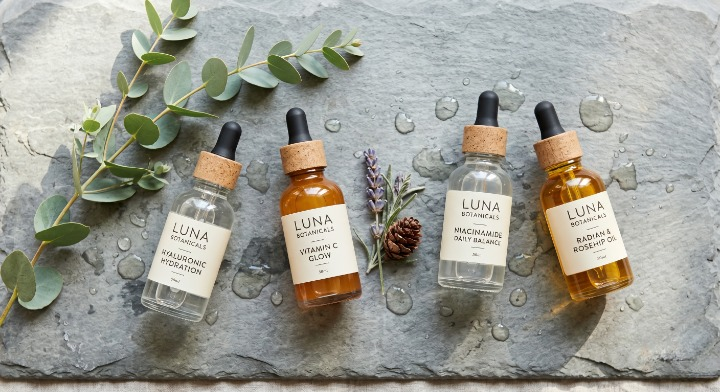
Niacinamide vs vitamin C — if you’ve ever Googled this,you’ve probably walked away more confused than when you
started. One source says they cancel each other out. Another says they’re the ultimate power duo.
This debate has circulated in skincare communities for years, and the fear comes from a single outdated study that has since been thoroughly debunked. Korean dermatology moved past this debate long ago. And if you look at the most effective K-beauty brightening formulas in 2026, almost all of them combine niacinamide and vitamin C — either in one bottle, or by recommending you layer both.
In this guide, I’ll break down what each ingredient does at a cellular level, explain the science behind whether they interfere, and give you the exact layering protocol that Korean skincare professionals actually use.
What Is Niacinamide?
Niacinamide — also known as nicotinamide or Vitamin B3 — is arguably the best all-around skincare active available today. Korean beauty formulators recognized its power decades before Western brands caught up.
What it does in your skin:
Pore size — Regulates sebum secretion via the PPARγ pathway, reducing visible pore diameter over 8–12 weeks of consistent use.
Brightening — Inhibits melanosome transfer from melanocytes to keratinocytes, effectively blocking the “delivery system” of pigment to your skin surface.
Barrier function — Stimulates ceramide synthesis, strengthening the skin barrier and reducing transepidermal water loss (TEWL).
Anti-inflammatory — Suppresses pro-inflammatory cytokines. Particularly useful for acne-prone and rosacea-adjacent skin.
Anti-aging — Upregulates collagen synthesis and reduces yellowing caused by protein glycation.
Key specs:
- Optimal pH: 5.0–7.0 (very flexible — works with most routines)
- Best concentration: 5–15%
- Results timeline: 2–4 weeks for visible brightening; 8–12 weeks for pore improvement
What Is Vitamin C?
Vitamin C (as L-ascorbic acid) is the gold-standard antioxidant in skincare. It’s the most researched brightening ingredient in dermatology — and Korean brands have mastered how to formulate it for maximum stability and gentleness.
What it does in your skin:
Antioxidant protection — Neutralizes free radicals from UV exposure and pollution. Your skin’s primary environmental shield.
Brightening — Inhibits the tyrosinase enzyme, blocking melanin production at the source. Faster-acting than niacinamide for dark spots.
Collagen synthesis — Essential cofactor for prolyl hydroxylase, the enzyme that stabilizes the collagen triple helix. No Vitamin C = weaker collagen.
Photoprotection — Reduces UV-induced oxidative damage. Does NOT replace SPF, but significantly amplifies its protection.
Key specs:
- Optimal pH: 2.5–3.5 (low pH required for L-ascorbic acid to penetrate)
- Best concentration: 10–23% (L-ascorbic acid); 5–10% for sensitive skin or derivative forms
- Results timeline: Glow in 1–2 weeks; dark spot fading in 4–8 weeks
The “Don’t Mix Them” Myth — Fully Debunked
The old claim: Niacinamide and Vitamin C react to form nicotinic acid (niacin), causing skin flushing and reducing the efficacy of both ingredients.
What the science actually shows:
The niacin-forming reaction requires sustained high heat (85°C+) for extended periods — conditions that simply don’t exist during normal skincare use. Modern research confirms:
- The reaction produces negligible amounts of nicotinic acid at room temperature
- Any potential reaction is prevented by modern pH-buffered formulations
- The amount produced is far below the threshold for visible flushing
- Minor efficacy reduction only applies at very high concentrations of both ingredients simultaneously
The more relevant consideration: at very high concentrations (15%+ niacinamide alongside 20%+ Vitamin C), there may be minor mutual interference. At typical K-beauty concentrations — 5–15% niacinamide and 10–23% Vitamin C — the combination is completely fine.
Korean dermatology has operated on this understanding for years. The ISNTREE C-Niacin Ampoule, GOODAL Green Tangerine + Niacinamide, and dozens of top K-beauty formulas combine both — because the combination works beautifully.
Niacinamide vs. Vitamin C: Head-to-Headc
When comparing niacinamide vs vitamin C, the results depend heavily on your skin concern.
| Skin Concern | Niacinamide | Vitamin C | Use Both? |
|---|---|---|---|
| Dark spots / PIH | ✓✓ | ✓✓✓ | ✓✓✓✓ |
| Pore appearance | ✓✓✓ | ✗ | ✓✓✓ |
| Brightening | ✓✓ | ✓✓✓ | ✓✓✓✓ |
| Collagen synthesis | ✓ | ✓✓✓ | ✓✓✓✓ |
| Barrier repair | ✓✓✓ | ✓ | ✓✓✓✓ |
| Antioxidant protection | ✓ | ✓✓✓ | ✓✓✓✓ |
| Acne / Oily skin | ✓✓✓ | ✓ | ✓✓✓ |
| Sensitive skin | ✓✓✓ | ⚠️ Use low % | ✓✓ with gentle forms |
The verdict: Using both addresses more concerns, through different biological pathways, than either ingredient alone. This is why Korean dermatologists recommend the combination — not as a trend, but as clinical best practice.
The Exact Layering Protocol
☀️ AM Routine
- Gentle cleanser — Low pH (4.5–5.5) to preserve skin barrier
- Vitamin C serum — Apply first. It needs the low-pH environment immediately after cleansing to penetrate effectively. Wait 3–5 minutes.
- Niacinamide serum — Apply second, once Vitamin C has absorbed. No interference at this stage.
- Moisturizer — Lock in both actives. Ceramide-rich formula preferred.
- SPF 50+ — Non-negotiable when using Vitamin C. Korean mineral sunscreen preferred.
🌙 PM Routine
- Oil cleanser — Step 1 of Korean double cleansing. Removes SPF and makeup.
- Water-based cleanser — Step 2. Gentle foam or gel.
- Niacinamide serum — Evening is ideal for barrier repair work.
- Moisturizer — Can be heavier at night. Skin repairs during sleep.
Professional tip: The 3–5 minute wait between Vitamin C and niacinamide is optional but ensures each active has optimal skin-contact time before layering. At normal K-beauty concentrations, there is no meaningful interference whether you wait or not.
Our Top Korean Picks on Amazon
All products personally evaluated. Affiliate links — supports this blog at no extra cost to you.
🏆 #1 Best Seller — COSRX 15% Niacinamide Face Serum
Best for: Pore control + hyperpigmentation
⭐ 4.4/5 (7,200+ reviews) | $19.99
The benchmark Korean niacinamide serum. At 15% concentration — clinical-grade pore minimizing — combined with zinc PCA for anti-bacterial and sebum-control support. The most recommended niacinamide serum in Korean skincare communities globally.
✨ Editor’s Pick — COSRX Advanced Pure Vitamin C 23% Serum
Best for: Dark spots + anti-aging + collagen support
⭐ 4.5/5 (9,700+ reviews) | $25.00
Pure L-ascorbic acid at 23% with Vitamin E and Glutathione. The most potent K-beauty Vitamin C available on Amazon. Best used in AM before your niacinamide step.
💙 Best Combo Formula — Anua Niacinamide 10% + TXA 4% Serum
Best for: Brightening + post-acne marks + all skin types
⭐ 4.6/5 (4,800+ reviews) | $21.85
Niacinamide + Tranexamic Acid = two brightening mechanisms in one bottle. Heartleaf extract calms inflammation simultaneously. If you want one serum doing the work of two, this is it.
🌿 Best for Sensitive Skin — Klairs Freshly Juiced Vitamin Drop
Best for: Vitamin C beginners + reactive or dry skin
⭐ 4.3/5 (3,100+ reviews) | $17.42
5% ascorbic acid — gentle enough for reactive skin. No sting, no orange-tint anxiety, no fridge storage required. The perfect starter Vitamin C to layer under niacinamide.
🍊 Cult Favorite — GOODAL Green Tangerine Vita C Dark Spot Serum
Best for: Natural Vitamin C + existing dark spot treatment
⭐ 4.5/5 (6,200+ reviews) | $26.00
70% green tangerine extract — naturally rich in Vitamin C — with 5% niacinamide already in the formula. One bottle = both actives combined. Korea’s best-known Vitamin C serum for a reason.
Frequently Asked Questions
Can you use niacinamide and vitamin C at the same time?
Yes — the old myth that they “cancel out” has been thoroughly debunked by modern formulation science. Apply Vitamin C first (it needs the low-pH environment), wait 3–5 minutes, then apply niacinamide. For maximum simplicity, use a formula like GOODAL’s that already combines both.
Which should I use if I can only pick one?
For general brightening, barrier health, and oily/acne-prone skin → Niacinamide. For fast dark spot fading and collagen support → Vitamin C. For glass skin that also fights signs of aging → use both.
Why does Korean skincare combine them so often?
Korean dermatologists recognized decades ago that niacinamide and vitamin C target different points in the pigmentation and aging pathway. Combined, they create a more complete brightening system than either ingredient alone — which is why the combination appears in premium K-beauty formulas across every price point.
I have sensitive skin. Is vitamin C safe?
Start with a derivative form at 5% or under. The Klairs Freshly Juiced Vitamin Drop is specifically designed for reactive skin — low concentration, EGF peptides, no sting. Avoid L-ascorbic acid at 15%+ until you’ve built tolerance.
How long until I see results?
Niacinamide: visible pore improvement in 4–8 weeks; brightening in 2–4 weeks.
Vitamin C: glow within 1–2 weeks; dark spot reduction in 4–8 weeks.
Combined protocol: visible improvement typically within 2–3 weeks.
The Bottom Line
The niacinamide vs vitamin C debate ends here.
Niacinamide and Vitamin C are not enemies — they’re complementary actives that address different stages of the same problems. Korean skincare understood this before the rest of the world caught up, and the formulas reflect it.
The protocol is simple: Vitamin C in the morning (before niacinamide), niacinamide morning and evening, always finish with SPF. Follow this consistently for 4–8 weeks and you’ll understand exactly why Korean glass skin isn’t a myth — it’s a methodology.
Found this helpful? Read next: